

Foresight-based strategy: How to anticipate change and act before disruption

- Global uncertainty is rising, but many organizations still plan around a single assumed future, leaving them stuck in reactive decision-making.
- A foresight-based strategy builds resilience by scanning for early signals, testing assumptions through scenarios, and preparing for multiple plausible outcomes.
- Companies like Netflix and Garmin show how acting early on emerging shifts can create strategic advantage, while late adaptation can erode stability.
- AI-powered strategic intelligence strengthens this approach by reducing the manual burden of scanning, keeping signposts under review, and linking strategy to live evidence.
Global uncertainty is at a 20-year high, with rapid technological, geopolitical, climate, social, and market changes creating a constant state of disruption. Yet many strategic planning processes still rely on past experience and optimize for a single, assumed future.
As systems evolve more quickly, teams often narrow planning horizons and postpone key decisions, reinforcing reactive behavior.
A foresight-based strategy offers a more resilient alternative by actively scanning for signals of change and preparing for multiple plausible futures.
By identifying emerging risks and opportunities early, teams can act with intent, shaping outcomes before shifts in the environment make change unavoidable.

What is a foresight-based Strategy?
Foresight-based strategy combines strategic foresight with core strategy work, so future insights translate into decisions. Instead of building a plan around one “most likely” future, it prepares for multiple plausible futures and what each would mean for choices.
Scenarios are used to test assumptions, develop distinct options, and define signposts and triggers so leaders can adjust as new evidence emerges.
In practice, teams draw on signals from across the external environment, translate them into a small scenario set, and ask a disciplined question: which choices remain sound across conditions, and which only work if the world behaves a specific way. The output is a clearer set of trade-offs, plus indicators that signal when it is time to revisit them.
Bosch, a global engineering and technology company, exemplifies effective scenario-based strategizing. It facilitates ongoing discussions between corporate leadership and regional units through scenario planning and conducts business wargaming workshops to anticipate competitor actions. Supported by a global trend scanning network, results are organized into clear strategic directions using the “strategy playbox” approach [4].
Netflix provides another illustrative example. The company transitioned from DVD rentals to streaming before the wider consumer shift toward online content became apparent.
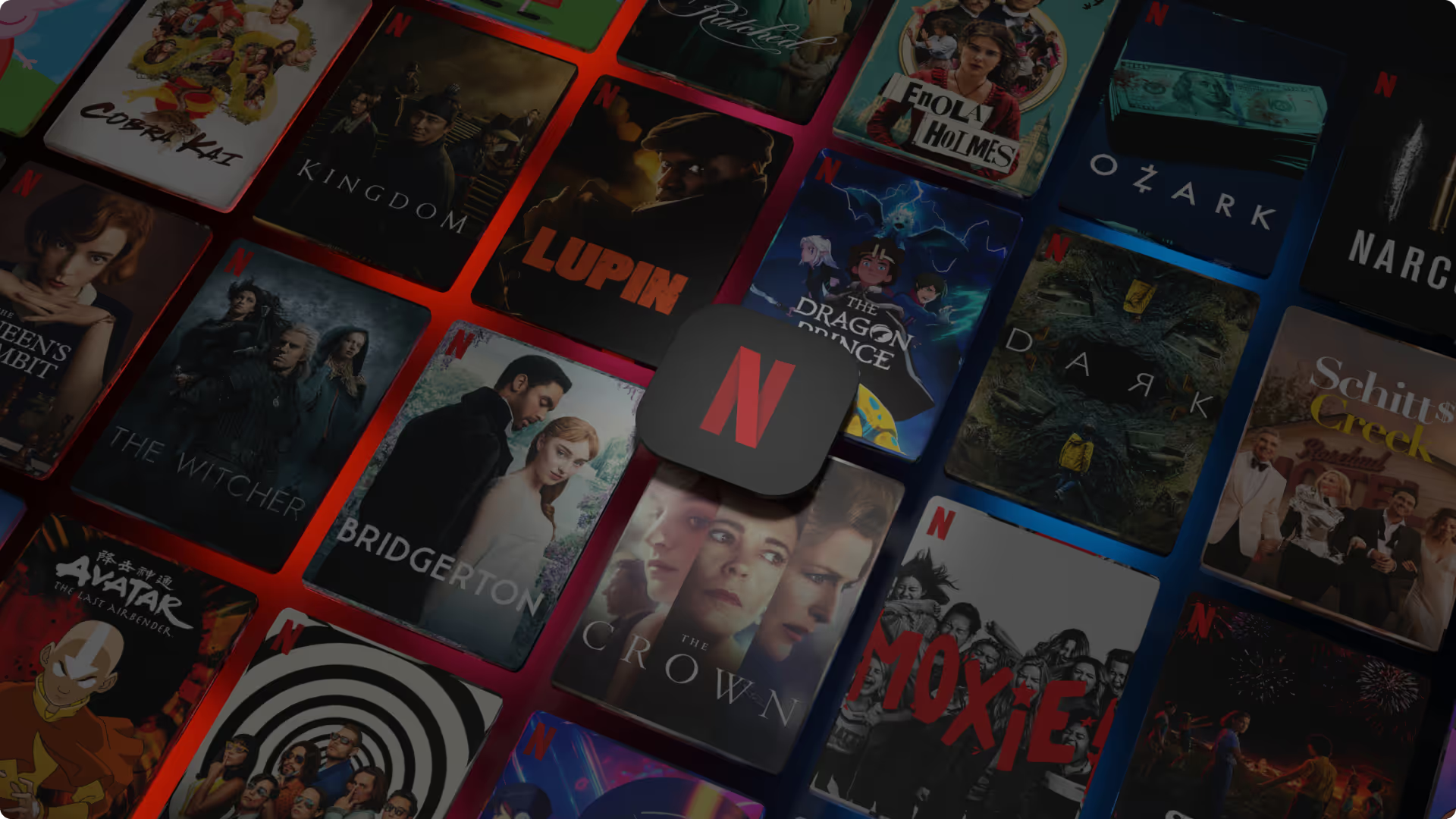
The key takeaway is not just the change in format but the timing of that change. By investing early in streaming while the shift was still emerging, Netflix positioned itself ahead of the disruption rather than having to adapt later.
Why does foresight-based strategy matter now?
Foresight-based strategy matters because many organizations respond to long-term change with rigid, short-term planning habits, trapping leadership teams in repeated tactical catch-up and costly internal realignment. Organizations with foresight capabilities are better positioned to shape change rather than simply absorb it.
They tend to respond faster in crises, be better prepared for disruption, and sustain long-term commitments with fewer abrupt pivots.
The benefits show up in decisions and outcomes:
- Higher decision quality. By evaluating strategic options across multiple plausible futures, leaders reduce overconfidence, surface hidden assumptions, and mitigate groupthink.
- Strategic flexibility. It helps organizations avoid lock-in by preserving optionality and defining when to shift direction as conditions change.
- Greater resilience. Stress-testing strategies against uncertainty reveal which choices are robust and which are fragile, reducing the risk of being blindsided by external shocks.
- Earlier adaptation. Signposts and triggers allow teams to adjust before disruptions escalate and costs rise. It involves early alignment and investment, scaled as evidence strengthens.
- Strategic advantage. It enables organizations not only to adapt but also to thrive by making timely strategic moves that shape markets and influence industry direction.
Garmin exemplifies how a foresight-based strategy can drive long-term success. As smartphones began offering free GPS navigation, the demand for standalone car GPS units declined.
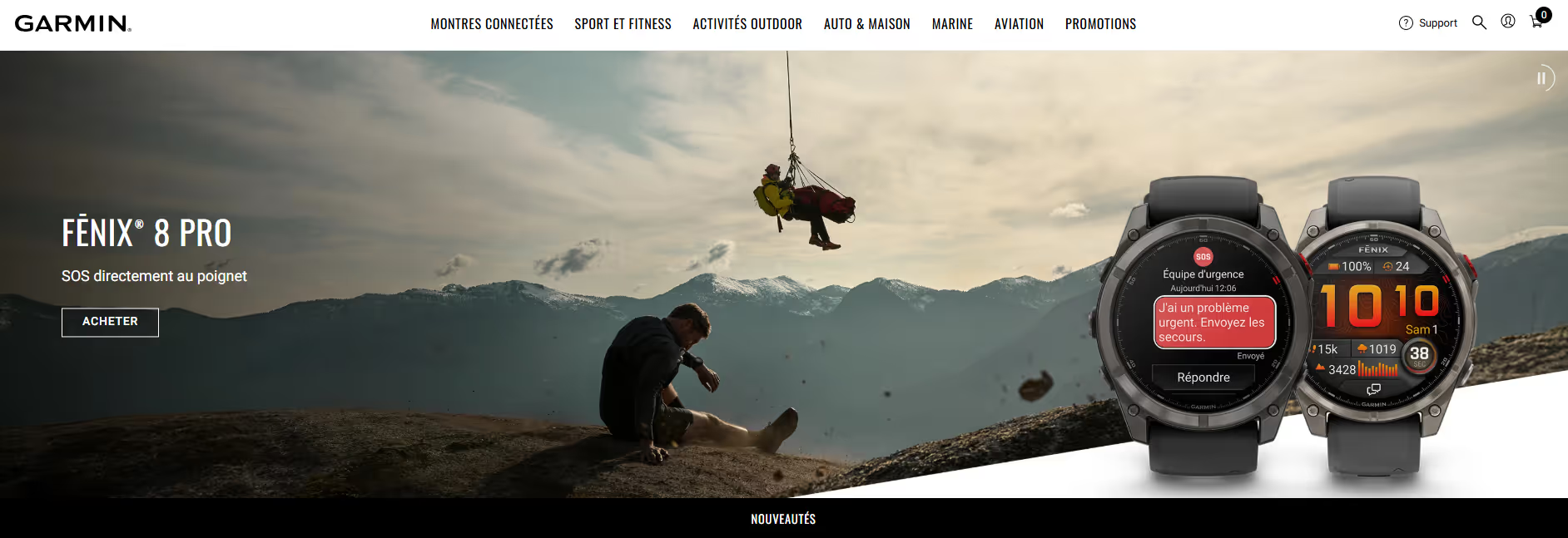
Instead of competing in this shrinking market, Garmin anticipated shifts in consumer behavior and shifted its focus toward fitness wearables and specialized GPS products. The company invested in its Forerunner and Fenix lines while expanding into outdoor, marine, and aviation markets. This early emphasis on emerging segments allowed Garmin to diversify and thrive despite declining traditional navigation sales, capitalizing on trends in wearable technology and precision devices.
TomTom’s stock performance stands in stark contrast to Garmin's.

While both companies saw initial share price drops as the standalone GPS market declined with the rise of smartphones, Garmin rebounded by shifting focus to wearables and other growth areas. In contrast, TomTom has struggled to find stability, reflecting its challenges in adapting to the ongoing decline in traditional navigation hardware.
How to implement it?
A foresight-based strategy cycle is a repeatable decision loop that connects tomorrow’s possibilities to today’s choices. It senses weak signals, identifies critical uncertainties and drivers of change, maps plausible futures, and stress-tests strategic options across them. It then translates the chosen path into initiatives and keeps decisions current through monitoring and review.
A typical workflow
- Set the strategic focus. Define the decision to be made, the time horizon, and the constraints you will not violate.
- Scan and sense. Track trends, weak signals, and emerging issues across the domains that shape the question. For instance, technology, regulations, economics, geopolitics, social behaviors, and environmental constraints.
- Identify key drivers and uncertainties. From the scan, shortlist the drivers that are both high impact and genuinely uncertain, because these are what make scenarios decision-relevant. Use simple domain lenses if helpful, but end with a small set of uncertainties that will shape outcomes.
- Map plausible futures. Build 3–4 distinct scenarios (or a reference scenario plus “what-if” cases) that challenge assumptions and explore how drivers could interact. Scenarios are tools for testing decisions, not predictions.
- Derive implications and options. For each scenario, identify what breaks, what becomes possible, and what capabilities become critical. Translate that into a short list of distinct strategic options with real trade-offs.
- Stress-test and choose. Evaluate options across scenarios. Separate efficacy from robustness, then select the most future-proof path and the contingencies you will keep ready.
- Translate into initiatives and a roadmap. Turn the chosen path into a portfolio of initiatives and a sequenced roadmap with decision points, timing, and clear ownership.
- Monitor signposts and update decisions. Define early indicators tied to the key uncertainties, set trigger thresholds, and review them on cadence so strategy updates are deliberate, not reactive.
How does AI-powered strategic intelligence support foresight-based strategy?
AI-powered strategic intelligence helps teams keep the foresight loop active between planning cycles. It reduces the manual burden of scanning and synthesis, expands coverage beyond a handful of familiar sources, and keeps key drivers and signposts under continuous review.
Read: How we solved every strategy consultant's nightmare
That makes the scenario more actionable because options and triggers remain linked to live evidence.
Where Trendtracker fits in the workflow
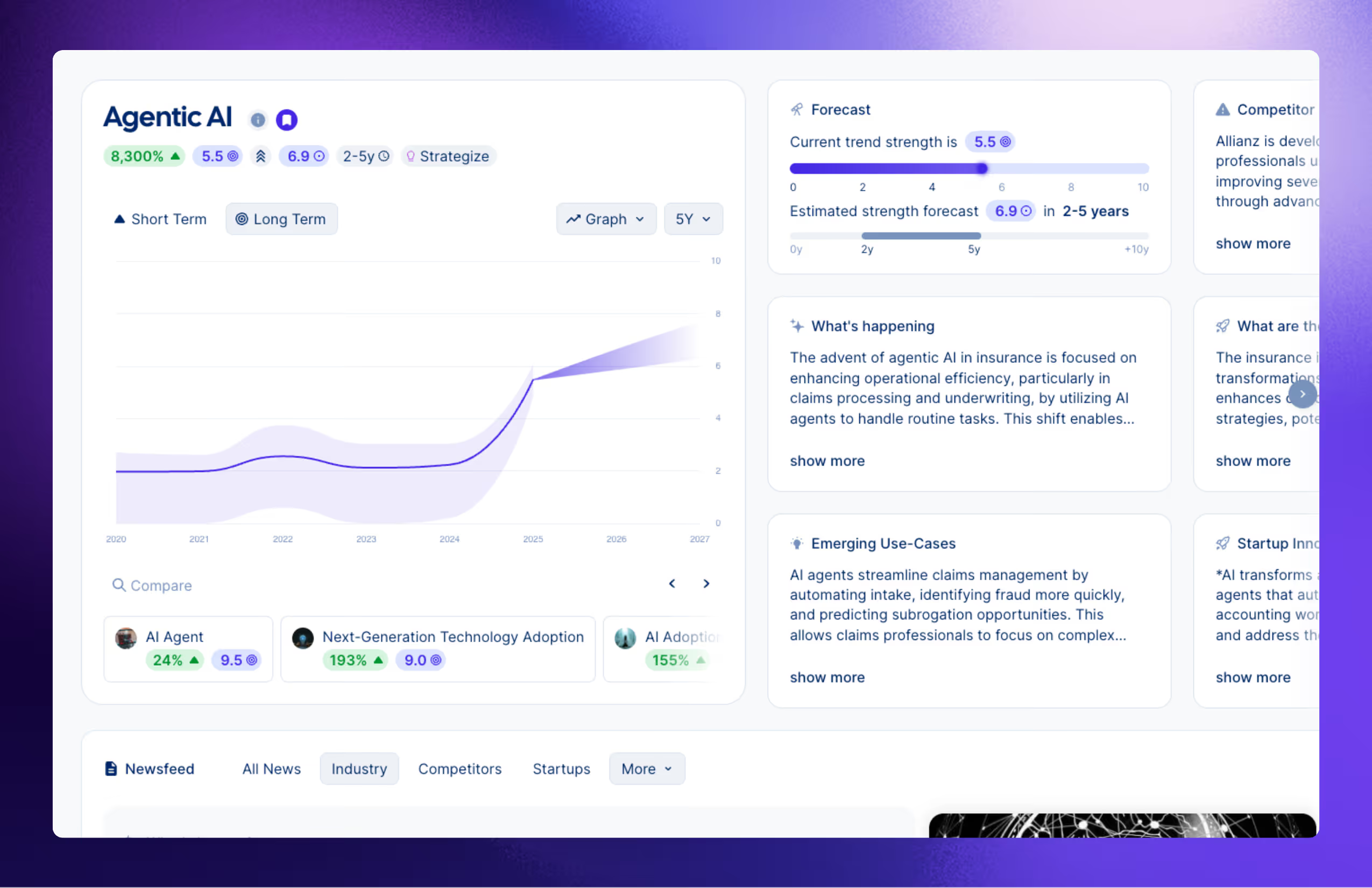
- Set the strategic focus. Trendtracker is designed to support intelligence that is tailored to a team’s strategic context and questions, rather than relying on generic, static market narratives.
- Scan and sense. The tool scans over 18,300 sources and analyzes more than 500 million documents, including research papers, patents, and news. This improves coverage compared to traditional manual horizon scanning, which tracks fewer sources and requires more time for data collection.
- Identify key drivers and uncertainties. Integrates AI-derived metrics with survey-based human evaluations to assess the impact and uncertainty of each trend, prioritizing the most decision-relevant drivers.
- Build scenarios. Provides a structured evidence base for uncertainties in scenarios, allowing teams to validate the importance of a driver, track its changes, and make clear, justifiable assumptions.
- Derive implications and options. It supports synthesis by translating trend movements into actionable insights that strategy teams can utilize during portfolio discussions, option design, and leadership reviews.
- Monitor signposts and triggers. A common issue is that teams create scenarios but then cease monitoring the factors that indicate which future is developing. Trendtracker keeps essential drivers under constant review.
Trendtracker acts as an AI-enhanced strategy and foresight analyst, supporting decision-makers in their strategic context.
It integrates continuous multi-domain sensing, structured impact and uncertainty assessments, and signpost monitoring to keep scenarios, options, and triggers aligned with current evidence.
Schedule a call with a strategic intelligence expert.
Conclusion
A foresight-based strategy is about making organizations resilient in the face of persistent volatility. By pairing choices with scenarios, options, and signposts, teams can commit with clearer trade-offs and adapt earlier as evidence changes.
AI-powered strategic intelligence strengthens the loop by keeping sensing, synthesis, and monitoring active between reviews.