


Adapting to a Changing World: What Insurance Executives Are Really Grappling With
Three insurance executives got unusually candid about the protection gap, the commodity trap, and whether the industry is grappling with the right problems.
In this article:
- The share of global business risk that is actually insured is the lowest it has ever been, and FM's Lou Gritzo argues a softening market is the moment to address that, not step back from it.
- Dean Sivley's parametric experiment at Berkshire Hathaway Travel Protection was eventually sunset, but the learnings from it live on and it raises a question about how the industry treats the things it tries and discontinues.
- The panel's most candid moment came at the end: what the industry should actually be worried about competitively has less to do with new entrants than with becoming commoditised.
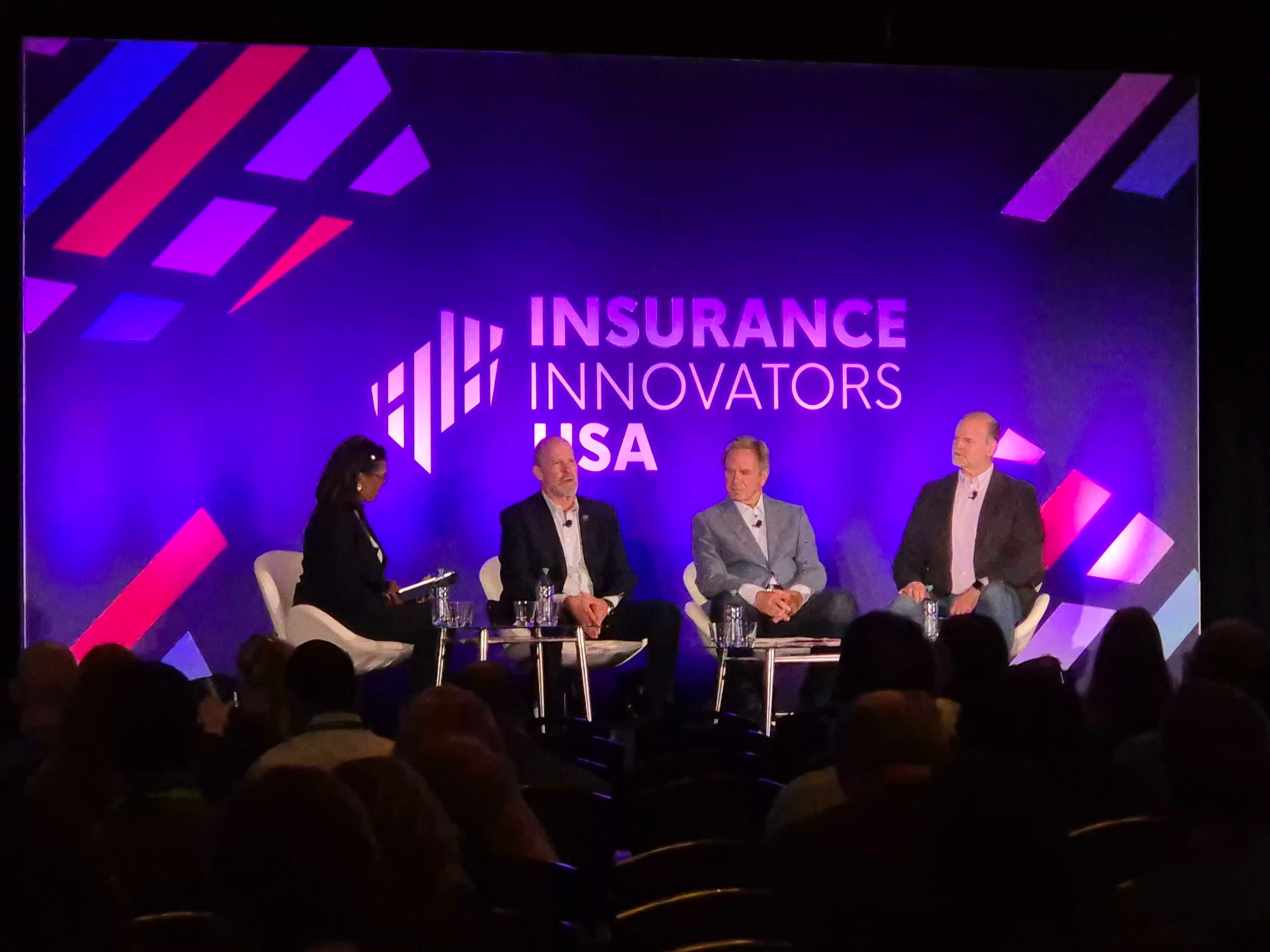
The opening executive forum at Insurance Innovators USA brought together Lou Gritzo, Chief Science Officer at FM; Dean Sivley, President of Berkshire Hathaway Travel Protection; and Marcus Rohifs, Director of Scouting and Trends at State Farm and State Farm Ventures. Three organisations, three very different positions in the market, and one conversation that was more candid than most panels manage.
Three themes came up with genuine energy: the growing protection gap, the question of what insurance is actually for in the customer relationship, and the competitive pressure the industry should be most concerned about. What follows is a summary of those threads.
1. The Protection Gap Has Been Growing for a While. A Softening Market Might Be the Moment to Do Something About It.
Lou Gritzo opened with a data point that grounded the conversation. The share of global business risk that is actually insured is the lowest it has ever been. This has been a slow-moving trend, not a recent shock, but the scale of it is striking.
FM has been running a program designed to address this from the inside out. Since 2022, the company has offered resilience credits to clients totalling approximately $1.1 billion.
"The insurance gap continues to grow. The fraction of the risk that is actually insured that businesses have around the world is the lowest it has ever been. For every $1 in resilience credit we offer our clients, we have been able through our engineering risk assessments to trace that back to $30 of reduction in loss exposure. A 1 to 30 return on investment."Lou Gritzo, Chief Science Officer, FM
Gritzo's argument was that a softening market, counterintuitively, creates the right conditions to push on this. When pricing pressure eases, clients have more room to think about resilience investment rather than purely cost. The question is whether carriers use that window or wait for the next hard market to do the forcing.
The protection gap came up not as a policy problem to be solved by regulators but as something the industry has some agency over - through engineering partnerships, better product design, and a willingness to engage clients on risk reduction rather than just risk transfer.
2. The Industry Keeps Rediscovering Things It Already Tried
Dean Sivley offered a case study that caught the room's attention. Berkshire Hathaway Travel Protection launched a purely parametric product called Air Care fourteen years ago. It monitored flight data and triggered a payout automatically when a delay reached two hours. No claim required. The product was eventually sunset.
"A lot of what's being discussed today around parametric, we tried fourteen years ago. The learnings from that are embedded in what we do now."Dean Sivley, President, Berkshire Hathaway Travel Protection
The point was not that the product failed. It is that the industry has a pattern of treating discontinued pilots as write-offs rather than as institutional knowledge. The conversations happening now about parametric capability, proactive service, and real-time intervention are in many cases conversations that parts of the industry have been having for over a decade.
Sivley also touched on what it looks like when service moves closer to the moment of need - a customer who gets sick abroad and receives assistance rather than paperwork, the doctor arranged before the claim is filed, the translator on the phone. He was careful not to claim this as a solved problem, but the direction of travel he described was toward insurance that does something useful at the moment it is needed, not only after the fact.
3. The Threat From Within
The panel was asked which new entrants the industry should be watching most closely. Marcus Rohifs pointed to OEMs and big tech automakers that own the hardware, the in-cabin software and the telematics data, and technology companies with the identity management and platform infrastructure acquisition cheaper and faster than it currently is.
But Gritzo's answer was different. He was less concerned about who might enter the market than about what the market might become.
"The biggest threat is the notion that insurance becomes a periodic commodity model. It is no longer a partnership to reduce and manage risk. You just go online, get the lowest cost provider, and you are totally clueless about what it actually covers."Lou Gritzo, Chief Science Officer, FM
The concern behind that quote is not primarily competitive, it is about purpose. If the industry optimises for price comparison and frictionless purchase, it may win on convenience while hollowing out the thing that makes insurance worth buying: the understanding, on both sides of the transaction, of what risk is actually being managed.
Gritzo's version of the alternative was an industry that demonstrates visible value, carriers that show up when it matters, pay quickly, and invest in resilience alongside their clients. He was not suggesting this is where the industry currently is. He was describing where he thinks it needs to go.
That was probably the most candid moment in the session. And it was a reasonable note to end on.
What made the session worth summarising was not that the themes were new. The protection gap, the service question, the commodity threat - these have been circling the industry for years. What was different was the directness. Three executives, no slides, no product pitches, saying what they actually think is going wrong and what the industry needs to do about it.
That kind of honesty is more useful than most conference sessions manage. The questions it raises are the ones worth taking back to the office. If you want a structured view of the forces driving those same tensions, our Megashifts Shaping the Future of Insurance report maps nine of them, from the protection gap to AI-enabled carriers into concrete scenarios your team can act on.
About Trendtracker
Trendtracker is an always-on strategic intelligence platform purpose-built for innovation, risk and strategy teams at enterprise insurers. By continuously scanning emerging signals across industries, geographies and risk categories, Trendtracker helps carriers identify underwriting opportunities and threats before they become visible in loss data, enabling smarter appetite decisions and first-mover positioning.


.avif)
