


The Next Competitive Advantage in Insurance

In this article:
- Why around 70% of AI implementation failures in insurance are organisational in nature, not technical, and what Nationwide's $1.5 billion commitment says about how seriously some carriers are taking that reality.
- Why large carriers are data rich but usability poor, and why waiting for perfect data before acting is a trap.
- How speed is replacing capital and distribution as the primary source of competitive advantage, and what that looks like in a quoting workflow that is already live.
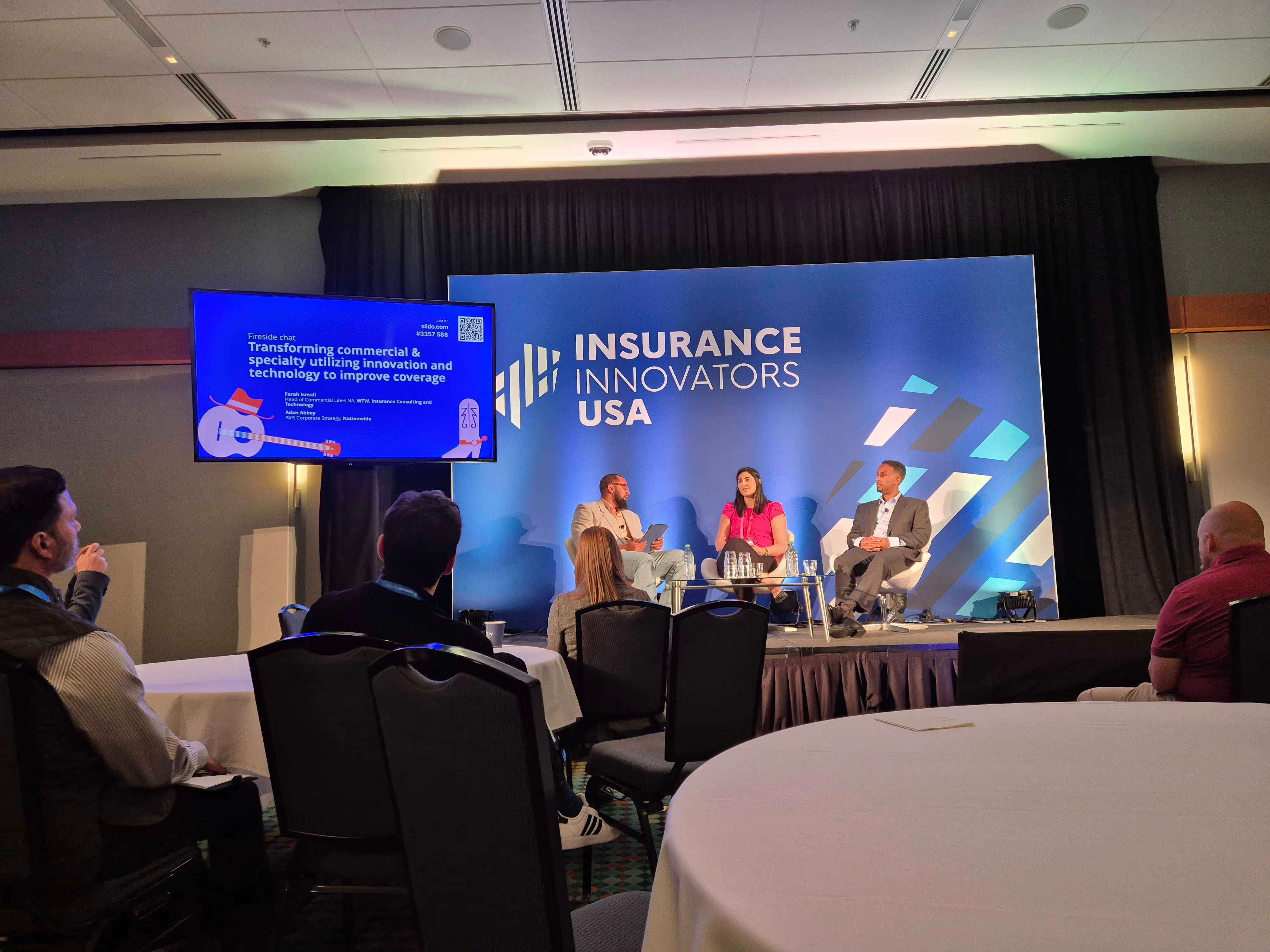
One of the more grounded conversations at Insurance Innovators USA this year happened in a session on AI, underwriting and the operational realities of getting from pilot to production. Adan Abbey, AVP Corporate Strategy at Nationwide Mutual Insurance, and Farah Ismail, Head of Commercial Lines at WTW, made a series of observations that reframed where the real work lies and where the next phase of competitive differentiation is actually coming from. It was a session that resisted the usual urge to make AI in insurance sound inevitable and frictionless.
The Problem Is Not the Technology
There is a tendency in the industry to treat AI adoption as primarily a technical challenge. The panel pushed back on that framing early. BCG research suggests that around 70% of AI implementation failures are organisational in nature, not technical.
"Adoption is usually not a technology problem. It's an organisational one. Siloed teams, inconsistent sponsorship, starts and stops in funding. The tools exist. Getting everyone moving in the same direction is the harder part." -Adan Abbey, AVP Corporate Strategy, Nationwide Mutual Insurance
Nationwide committed $1.5 billion in technology investment, with $100 million per year over the next three years dedicated specifically to AI. The scale of that commitment reflects a genuine belief that the window for competitive positioning is open, but also that it will not stay open indefinitely. For carriers still in the early stages of making the organisational case internally, that framing is worth sitting with.
Data Rich, Usability Poor
On data, arguably the foundational challenge for any AI programme, the panel made a distinction worth holding onto. Large carriers are not short on data. They are short on usable data. Years of legacy systems, inconsistent structures and siloed storage mean that the volume is there but the accessibility often is not.
Adan's practical response to this: test in sandboxes before you scale. Do not wait for perfect data, it will not come, but do not roll things into full production until you have stress-tested them in a safer environment.
"For carriers that have been operating for a century, there is simply too much at stake to move fast without that intermediate step." - Adan Abbey, AVP Corporate Strategy, Nationwide Mutual Insurance
It is a disciplined answer, and a less glamorous one than most conference panels offer. But it is an honest account of where AI programmes tend to stall.
Speed as the New Currency
Historically, competitive advantage in insurance came from two places: capital and distribution. Adan's view is that both of those are changing. Alternative capital has made the first more accessible. Distribution is no longer dominated by a single channel.
"What's emerging in their place is a combination of data intelligence, speed, and trust." - Adan Abbey, AVP Corporate Strategy, Nationwide Mutual Insurance
Speed in particular came up repeatedly. Carriers that can automate submissions, return quotes faster and reduce friction at every point in the workflow are already pulling ahead. The panel pointed to a workers' compensation carrier that recently integrated a conversational AI tool directly into its quoting process. A small business owner can describe their business and the quote starts generating in real time. That is not a distant possibility. It is happening now.
The implication for the rest of the industry is straightforward: the carriers that are still rationalising slow workflows have a shorter runway than they might think.
What the Next Ten Years Look Like
The carriers that will lead the next decade are the ones building around data intelligence and moving quickly enough to act on it, not just collecting it. It often brings a build-versus-buy question, and what is best depends on the context of the application. Data sensitivity pushes toward building internally. Timeline pressure often pushes toward partnering. Neither is universally right, and the organisations getting this well are the ones treating it as a case-by-case decision rather than a default.
The rules of the game are being rewritten. The session was refreshingly specific about where the friction actually is: not in the technology, not in the ambition, but in the organisational plumbing that determines whether any of it reaches production. Carriers who recognise that early, and organise accordingly, are the ones who will be in the best position when the dust settles.
If you want a structured view of the forces driving those same tensions, our Megashifts Shaping the Future of Insurance report maps nine of them into concrete scenarios your team can act on.