

Platform Category

What is a strategic intelligence platform?

It's the operational infrastructure for knowing what's coming. A strategic intelligence platform continuously monitors markets, technologies, regulations, and competitive signals, your entire PESTEL environment, and turns that external noise into structured insight your team can act on.

Trusted by strategy teams at
Problem

The pace of change has outgrown the way strategy teams work.

Sounds familiar

Trend reports that are outdated before they reach the boardroom
Analysts spending 60% of their week on research, not strategy
No shared view of what the organisation is actually tracking
Insights that live in one person's head, or one team's spreadsheet
Strategic surprises that weren't actually that surprising, in hindsight

What changes with a platform

A live, continuously updated view of your external environment
Intelligence structured around your industry, geography, and strategic priorities
One shared workspace your whole strategy function works from
Quantified signals, so you know what's emerging, what's peaking, what's noise
Decisions made with evidence your board can interrogate
Defining the category
A strategic intelligence platform continuously collects, structures, and analyses information from across the external environment, markets, competitors, regulations, emerging technologies, consumer behaviour, and surfaces it as actionable insight for decision-makers.
The word platform is deliberate. Unlike a one-off report or a research project, a platform operates continuously. It evolves with your market. It doesn't capture a moment, it monitors a landscape across time horizons.
Who uses it

The teams that run on strategic intelligence

Chief Strategy Officers & Foresight Teams

Turn environmental scanning into a continuous function, not a quarterly fire drill. Feed live intelligence into planning cycles and stress-test assumptions against what's actually forming in the market.

Chief Strategy Officers & Foresight Teams

Turn environmental scanning into a continuous function, not a quarterly fire drill. Feed live intelligence into planning cycles and stress-test assumptions against what's actually forming in the market.

Chief Strategy Officers & Foresight Teams

Turn environmental scanning into a continuous function, not a quarterly fire drill. Feed live intelligence into planning cycles and stress-test assumptions against what's actually forming in the market.

Market & Consumer Intelligence Teams

Detect shifts in customer needs before they show up in survey data or sales figures. Connect weak signals into a coherent market story that drives product, GTM, and portfolio decisions.

Investment & M&A Teams

Understand the maturity and trajectory of market trends before committing capital. Know whether a space is emerging, peaking, or already consolidating.
Core capabilities

What a strategic intelligence platform does

Platforms in this category vary, but the core capability set covers six areas. Here's what to look for, and what each one enables.
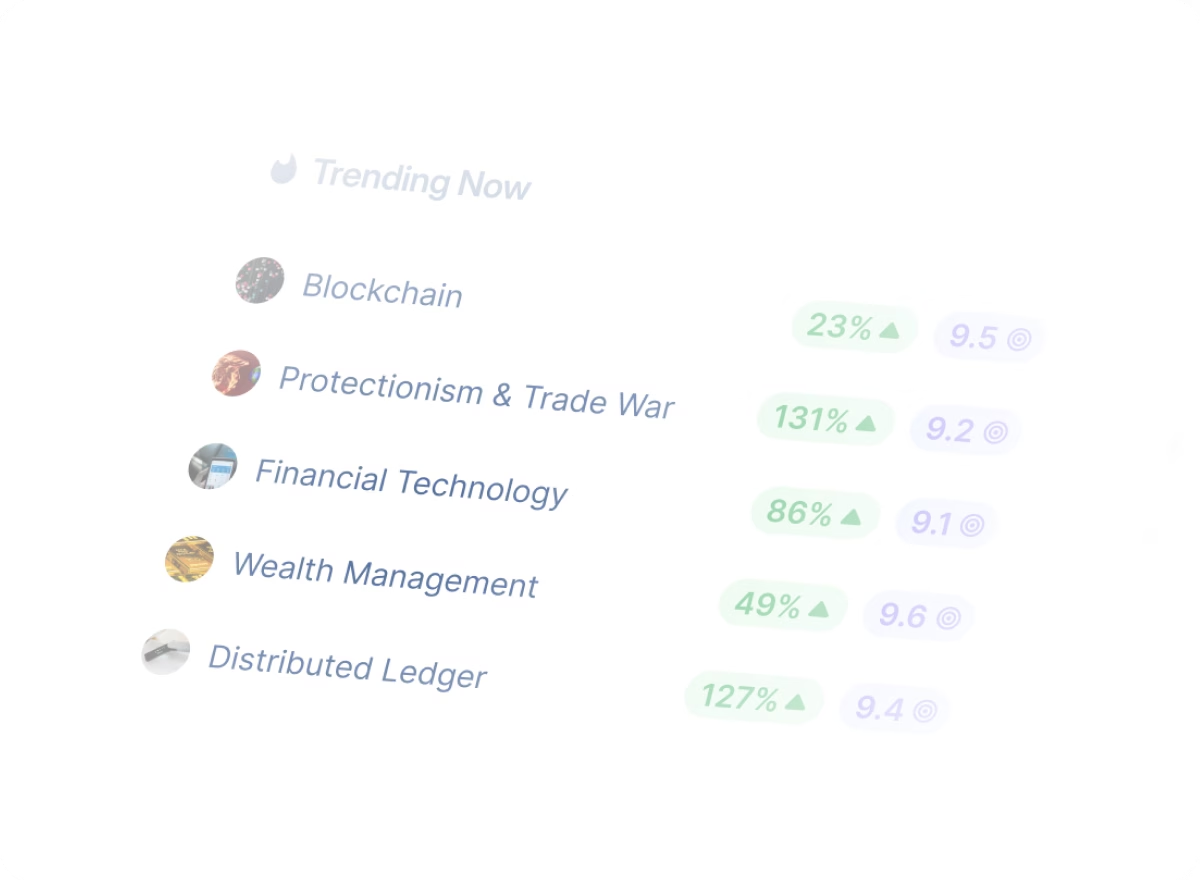
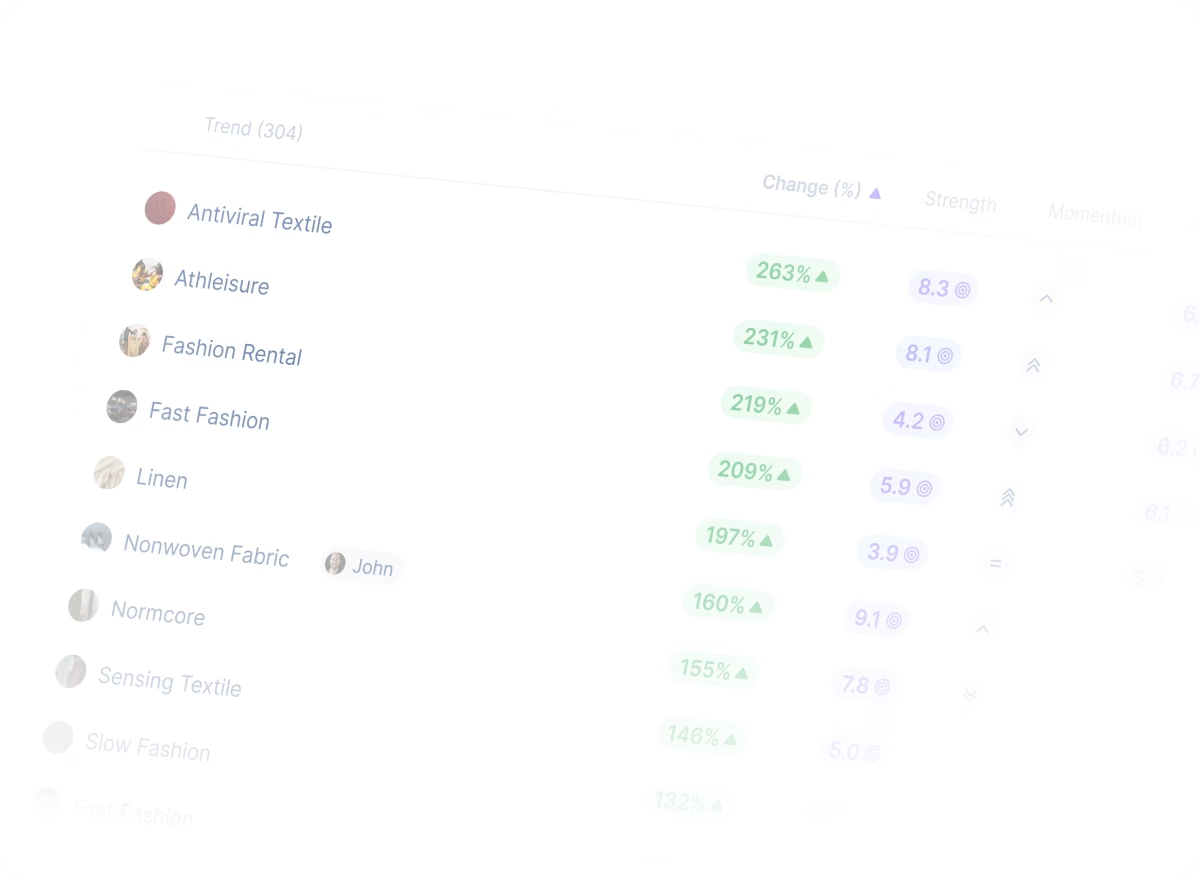
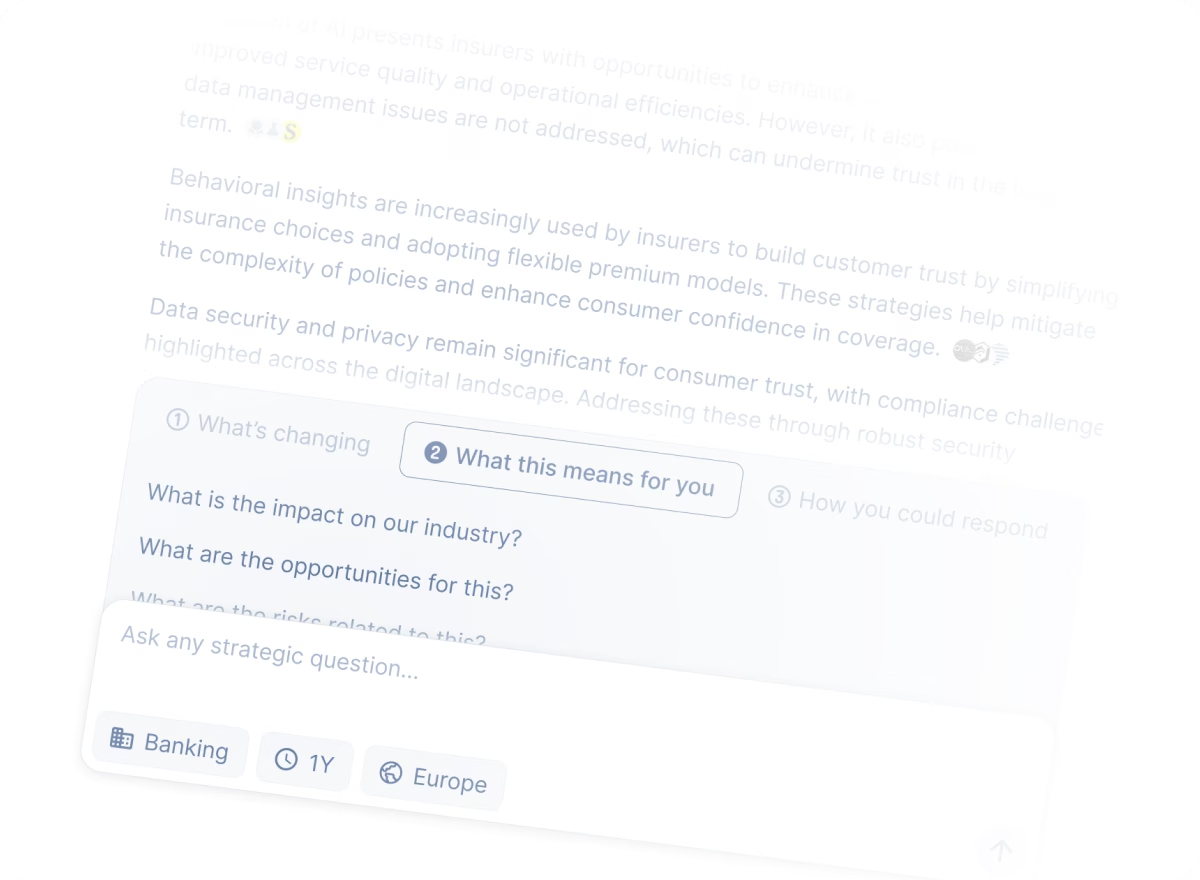
Trend monitoring & discovery

Continuous scanning of external sources, news, patents, academic publications, industry reports, social signals, to identify emerging patterns as they develop. Not after they've peaked, not when a competitor has already moved. The difference between knowing and reacting.
See how Discover works ->

Structured workspaces for organising intelligence

Raw information only becomes useful when it's organised around your strategic agenda. Trend boards let your team curate, categorise, and prioritise what you're tracking across industries, geographies, and PESTEL dimensions, and share it without rebuilding from scratch every quarter.
See how Trend Boards work ->

Signal scoring & strength analysis

Not all trends are equal. The AI Analyst scores every signal by Strength and Momentum on a normalised 0–10 scale, separating genuine strategic indicators from noise. If a platform can't score a trend, it can't help you prioritise one.
See how the AI Analyst works ->

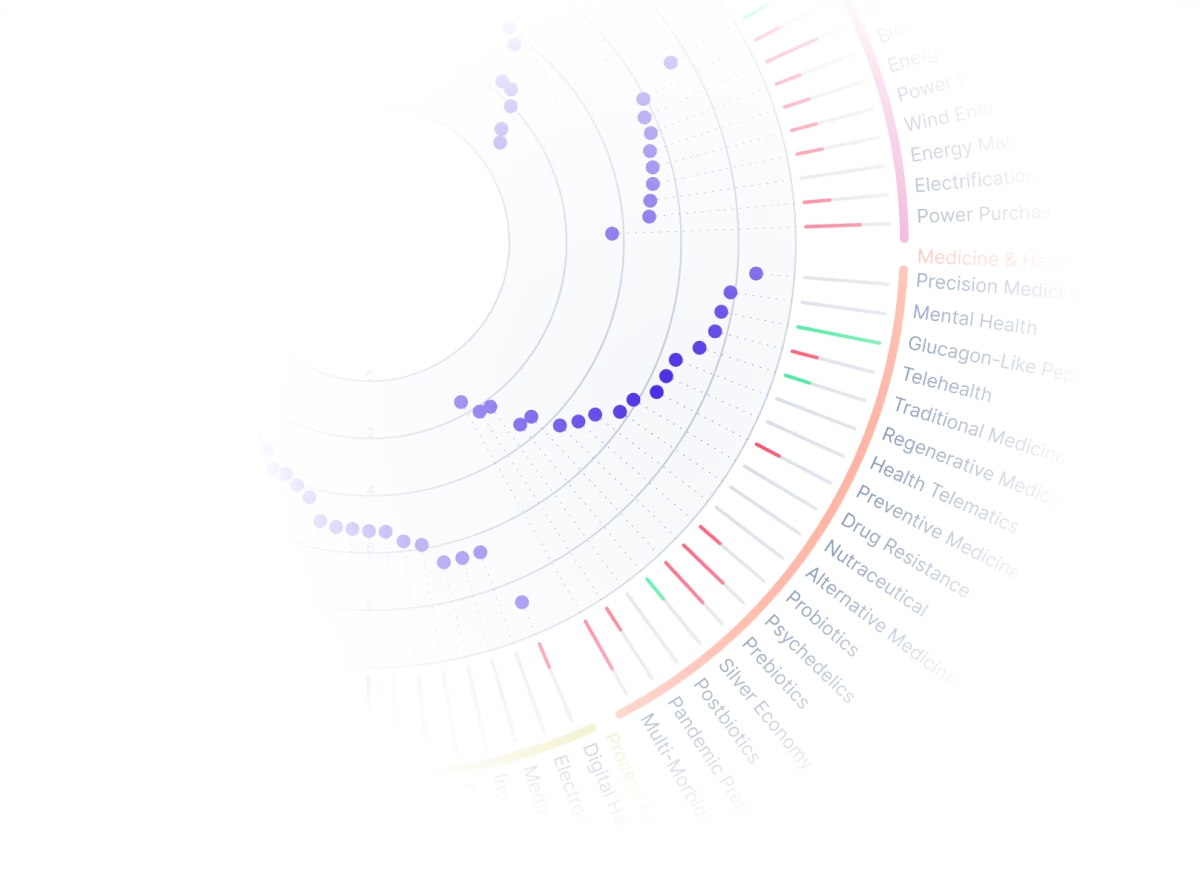
Automated trend radars

A trend radar is only useful when it is continuously updated. Trendtracker generates and updates radars automatically, mapping trend maturity and momentum across industries, regions, and PESTEL dimensions, so your team always has a live, board-ready view of the landscape without manual rebuilding every quarter.
See how Trend Radar works ->

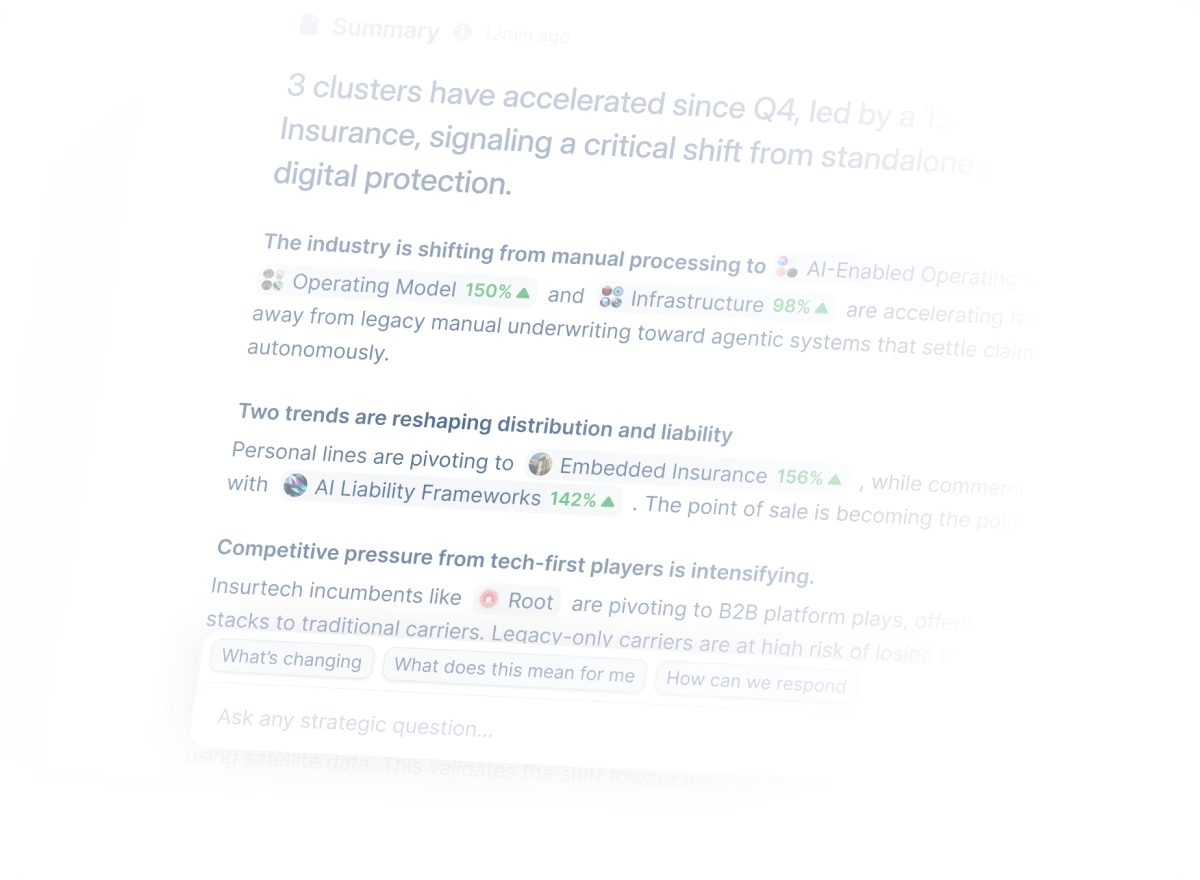
Continuously updated strategy briefs

Intelligence that stays in a platform is intelligence that doesn't get used. The Strategy Brief distils what changed, why it matters, and what to consider next, structured around your team's initiatives, backed by traceable signals, and ready for board presentations in minutes rather than weeks.
See how Strategy Brief works ->

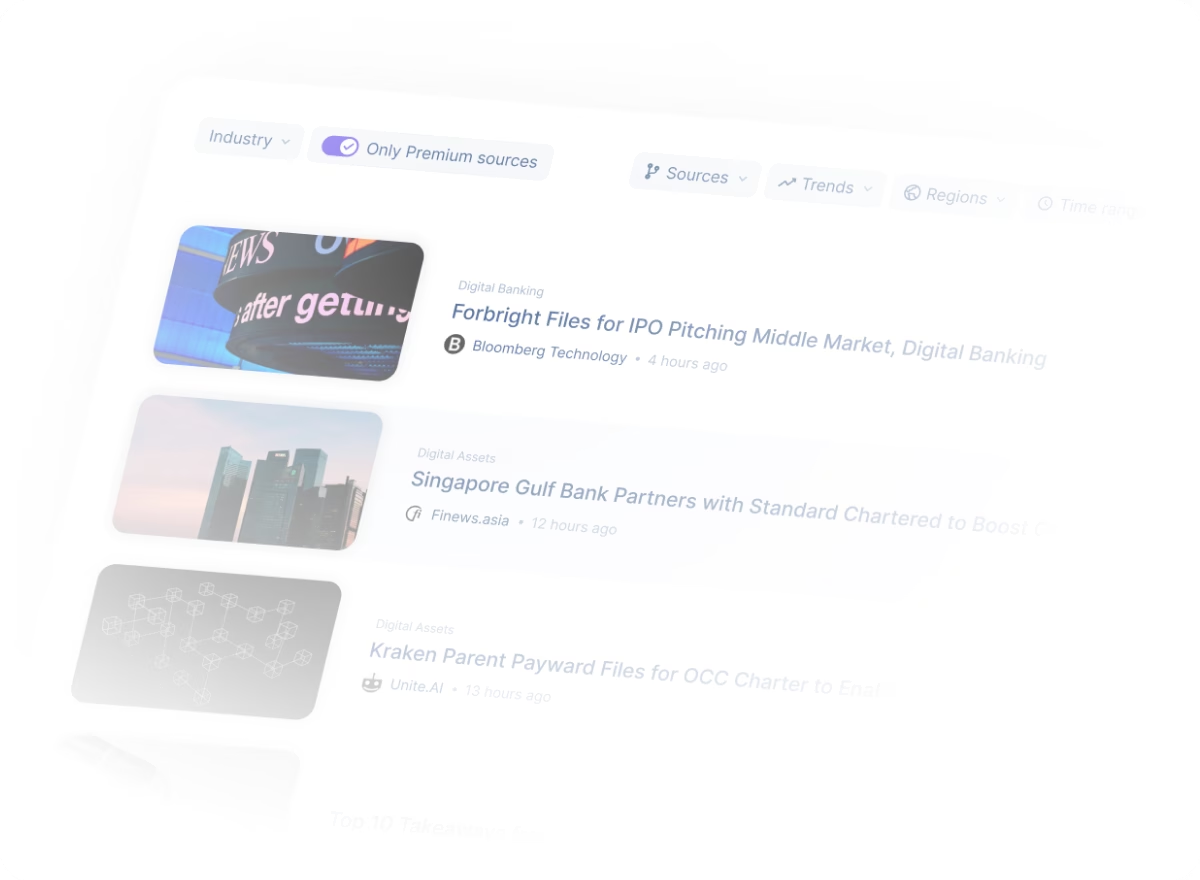
Personalised trend news

Staying current shouldn't require hours of manual scanning. Trend News delivers a continuously updated, personalised feed of the news that matters to your team, filtered by your industries, geographies, and strategic themes, so the signal reaches you without the noise.
See how Trend News works ->
The unified intelligence layer

One platform. Five intelligence layers.

Most organisations don't lack intelligence. They lack a unified place  for it. Strategy teams typically draw from five separate sources, each  valuable in its own right, none of them connected.

Academic & Research

Patents and scientific publications, where the earliest innovation signals live, often 18–24 months ahead of commercial adoption.

Market & Competitive

Competitor moves, regulatory shifts, and market dynamics that tell you what's happening in your landscape right now.

Consumer & Media

Social signals, consumer sentiment, and cultural shifts that indicate where mainstream adoption is forming.

Strategic Foresight

Scenario planning and horizon scanning that provide the long-range view, often sourced from periodic engagements.

Consulting & Advisory

Expert synthesis and bespoke analysis, high value but expensive, slow to refresh, and gone when the engagement ends.
Trendtracker monitors the first three continuously and feeds them into a single scored environment that powers the fourth and reduces dependency on the fifth. Not five subscriptions. Not five workflows. One always-on intelligence layer.
How to evaluate

Seven questions to ask before choosing a platform

Before committing to any platform, these are the questions worth asking, of every vendor in the category.

What is the actual data coverage?

How many sources, what types - news, patents, academic research, filings, social signals - and how current? Coverage breadth determines whether you're seeing the full landscape or a filtered slice of it.

How is relevance determined?

Does the platform surface everything and leave filtering to you, or does it apply a model to assess what's signal versus noise? How transparent is that model? Can you interrogate it?

How current is the intelligence?

Weekly digests serve a different need than near-real-time monitoring. Latency matters when you're trying to see things before they peak.

Can it be contextualised to your industry?

Generic monitoring produces generic insight. Ask whether the platform can be configured to your competitive context - specific sectors, geographies, and strategic themes that matter to your organisation.

How does it support team workflows?

Insight that isn't shareable isn't actionable. Can teams collaboratively curate findings? Can insight be exported into formats that support board presentations, strategy sessions, or executive briefings?

What does implementation look like?

A platform's value depends entirely on adoption. Understand the onboarding process, ongoing support model, and the typical time-to-value for teams in your sector.

How do existing customers measure ROI?

Ask for specifics - not platform activity metrics. Decision speed, analyst hours redirected, and strategic initiatives informed are the numbers that matter.

Social proof

How leading organisations use strategic intelligence platforms

Strategy and innovation teams at PepsiCo, Ageas, P&G, Siemens, Zurich Insurance, BNP Paribas, and the Geneva Association use Trendtracker as their strategic intelligence infrastructure. Here's what that looks like in practice.

Need clarity?
You’re in the right place.

What is a strategic intelligence platform?

A system that continuously monitors the external environment - markets, technologies, regulations, competitors and organises that information into structured, actionable insight for decision-makers. Unlike research tools, it operates persistently, updating as the landscape evolves rather than capturing a moment in time.

How is Trendtracker different from general-purpose AI tools?

General-purpose AI responds to questions based on information captured at a point in time. Trendtracker monitors the evolution of trends and risks continuously, scoring each by Strength and Momentum on a normalised 0-10 scale and tailors insights to your specific industry context, competitive landscape, and strategic priorities rather than generating generic responses.

What's the difference between a strategic intelligence platform and a competitive intelligence tool?

CI tools monitor what competitors are doing now. Strategic intelligence platforms track the full external environment - technologies, regulations, macroeconomic signals, and market shifts and feed the strategic planning function rather than the sales and marketing inbox.

Can multiple teams across our organisation use Trendtracker from a shared intelligence base?

Yes. Strategy, risk, innovation, and market intelligence teams each work from independently configured boards, tailored to their specific mandate, so every function draws from the same continuously updated intelligence without needing separate tools or fragmented processes.

How do organisations measure the ROI of a strategic intelligence platform?

The most commonly cited metrics are reduction in analyst research time, speed of strategic decision-making, and quality of board-level briefings. Most organisations report positive ROI within the first year of adoption.
See what your competitors are missing

Book a 15-minute demo and watch Trendtracker surface the signals that matter, before anyone else acts on them.